Art in Patterns: Form and Geometrization Across Time and Space
Online Conference Series
June 4, 11, and 18, 2026 · 10:00 AM (GMT-4)
Register for the Conference
The Museo Chileno de Arte Precolombino presents a new online seminar exploring geometric art and the use of patterns across cultures, historical periods, and regions of the world.
Over the course of three online sessions, specialists from different regions of the world will examine how geometric motifs show both continuities and transformations, operating beyond the dichotomy between the figurative and the abstract and revealing their capacity to structure complex and meaningful visual languages.
Bringing together perspectives from the Americas, Africa, Europe, and beyond, the seminar seeks to rethink pattern and geometric form through their social, cultural, and aesthetic impact. In doing so, it highlights the power and versatility of geometric art, questions traditional frameworks of art history, and opens new ways of approaching its study through more inclusive, comparative, and decentralized perspectives.
El Museo Chileno de Arte Precolombino invita a participar de un nuevo espacio de discusión en torno al arte geométrico y el uso de patrones, abordando sus múltiples manifestaciones en diversas culturas, períodos históricos y regiones del mundo.
Durante tres sesiones en línea, especialistas de distintas partes del mundo expondrán cómo los motivos geométricos presentan continuidades y transformaciones y operan más allá de la dicotomía entre lo figurativo y lo abstracto, revelando su capacidad para estructurar lenguajes visuales complejos y significativos.
El seminario reúne perspectivas desde América, África y Europa y más allá, con el fin de repensar el patrón y la forma geométrica desde su impacto social, cultural y estético. Así, el encuentro busca visibilizar la potencia y versatilidad del arte geométrico, cuestionar los marcos tradicionales de la historia del arte y abrir nuevas formas de pensar su estudio desde enfoques más inclusivos, comparativos y descentralizados.
June 4th | June 11th | June 18th | |
10:00 AM | Welcome and Introduction | Welcome and Introduction | Welcome and Introduction |
10:05 AM | “Curating Indigenous Geometric Art from the Americas: Between Pan-Americanism and Localism” | “Pattern and Memory: Archaeological Perspectives on Design in Material Traditions of the Jos Plateau” | “Patterning Translation: Victoria Barr, Indonesian Visual Systems, and the Limits of Western Abstraction” |
10:30 AM | “Surface, Pattern, and Reduction in Maya Visual Culture” | “Mapping Motifs, Weaving Worlds” | “Non-Figurative Motifs in Romanian National Style Architecture and Decorative Arts, early 20th century” |
10:55 AM | “Semasiographic Systems of Baja California: Non-Figurative Signs for Communicating (with) the Invisible” | “Patterns of Encounter: Adopting and Adapting African Pyrography Motifs in British Design” | “Patterning Worlds in the Balkans: Non-Figurative Traditions and the Structuring of Perception” |
11: 20 AM | “A Geometrical Conundrum: Abstract Figuration and Figurative Action in Amerindian Art” | “Black Skin, Abstract Patterns: Madeleine Christine Forani in the Belgian Congo (1954–55)” | “Repetition, Reflection, and Reuse: Non-Figurative Ornament in Medieval and Early Modern Malta” |
11:45 AM | Q&A | Q&A | Q&A |
12:05 AM | Closing Remarks | Closing Remarks | Closing Remarks |
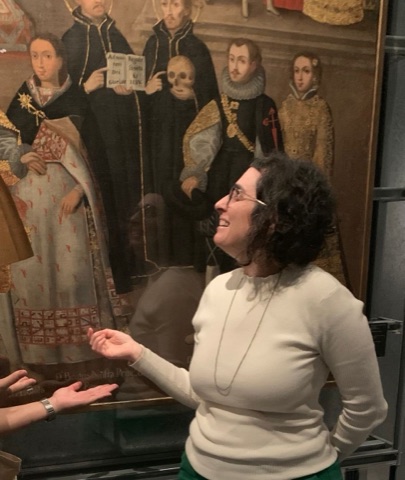
Bat-ami Artzi is an art historian, archaeologist and curator, Ph.D. from the Hebrew University of Jerusalem, specializing in ancient and colonial Andean art. Her research focuses on the gender structures of ancient Andean societies, the representation of plants and landscapes in Chimú and Inca art, and on Indigenous perspectives concerning the Spanish invasion—subjects on which she has published numerous contributions. Bat-ami was a visiting professor in the Andean Studies Program at the Pontificia Universidad Católica del Perú. Her studies were supported by the Dumbarton Oaks Research Library and Collection, the Institute for Art History in Florence (the Max Planck Society), and the Prussian Cultural Heritage Foundation, among others. Currently she serves as a curator at the Museo Chileno de Arte Precolombino.
Charlene Vella is Associate Professor of Art History in the Department of Art and Art History at University of Malta, specialising in the artistic and cultural exchanges of the Late Medieval and Renaissance Mediterranean. Her research focuses particularly on Malta and Sicily as interconnected centres of visual production and melting pots of cultures. Her interests span painting, sculpture, architecture, patronage, workshop practices, the movement of artists and ideas, digital art history and the digital humanities. She is the author of the monographs 'The Mediterranean Context of Late Medieval Malta 1091–1530' (2013) and 'In the Footsteps of Antonello da Messina: The Antonelliani between Sicily and Venice' (2022).
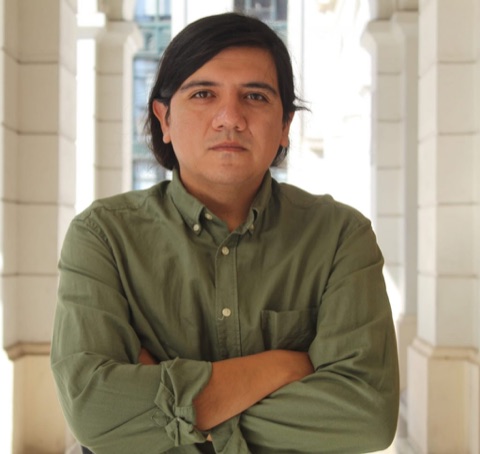
Claudio Alvarado Lincopi is a historian, researcher, and curator specializing in cultural history, Latin American critical thought, and Indigenous studies. He holds a PhD in Architecture and Urban Studies and currently works as a curator and researcher at the Museo Chileno de Arte Precolombino.His work addresses issues related to colonialism, memory, the city, material and visual culture, as well as the urban experiences of Indigenous peoples in Latin America. He has published numerous books and articles, curated exhibitions, and collaborated on theatrical projects. He is currently developing his first film, titled Mapurbekistán.
Deborah Dainese holds a PhD in Art History from the Sainsbury Research Unit for the Arts of Africa, Oceania, and the Americas (UEA, UK). Her research focuses on the biography of the Congolese modern artist Gabriel Matshitolo (c. 1915–2001), who lived in the Kwango Province of the Democratic Republic of Congo in the mid-Twentieth century. In her roles as an assistant curator and provenance researcher at the Diocesan Museum of Vicenza and at the Vatican Museums, she has gained valuable experience in curatorial museum practice. Her research interests include modern Congolese art, archival research, and missionary exhibitions.
Eva Zak is assistant professor of Art History and co-director of Museum Studies at Adelphi University in New York. She specializes in the 20th century, with a focus on marginalized women and LGBTQIA+ figures of the Modern and Contemporary periods in France, the United States, and Imperial and Soviet Russia. She teaches courses in the histories of modern and contemporary art, graphic design, women in art, and museum studies. She also serves as a reviews editor for Apparatus Journal of Film, Media and Digital Cultures in Central and Eastern Europe. Her current book project, focusing on the work and writings of Esfir Shub, is made possible through a grant from the Metropolitan Museum of Art's Lauder Research Centre for Modern Art.
Emma Wingfield, PhD in Visual Cultures from Goldsmiths, University of London, is Assistant Professor in the Faculty of Art at University of Indianapolis. Her scholarship draws on extensive fieldwork, ethnographic, archival, and material object research, situated at the intersection of contemporary art and design, impact economics, anthropology of global commerce, and material culture in West Africa and North America. She is also Co-Founder and Head of Development and Curation for a design brand and nonprofit dedicated to preserving and supporting contemporary handwoven textiles and design in Côte d’Ivoire.
Felipe Armstrong is an archaeologist, with a PhD in Archaeology from the UCL Institute of Archaeology, United Kingdom, completed in 2019, and an MA in Comparative Art and Archaeology from the same institution, completed in 2012. He received his professional degree in Archaeology from the Universidad de Chile in 2011. He has taught and served as a visiting lecturer at several Chilean universities, and is currently Chief Curator at the Museo Chileno de Arte Precolombino. His work focuses on the archaeology of art, particularly rock art in the semi-arid north of Chile and anthropomorphic art from Rapa Nui. He currently participates as a co-investigator in research projects in North-Central Chile. He has published several scientific studies and is co-editor of Archaeologies of Rock Art: South American Perspectives (Routledge, 2017).
Fernanda Gurovich holds a Master in Archaeology from the Universidad de Chile. Her research focuses on the study of rock art, with particular emphasis on the social practices involved in its production and experience. Her work integrates archaeometric methods and multiple lines of evidence to understand the historical and spatial configuration of rock paintings from North Central Chile. She currently works as assistant curator at the Museo Chileno de Arte Precolombino, where she is involved in curatorial and research activities related to archaeological heritage and precolumbian art.
Dr Maja T. Izquierdo is a full professor of architecture at Union Nikola Tesla University, Belgrade. Her work operates at the intersection of architecture, visual studies, and psychology, focusing on non-figurative visual systems, neuroarchitecture, and perceptual approaches to space. Her research examines pattern as a structuring principle across cultures, with particular attention to repetition, symmetry, and modular variation in shaping perceptual, spatial, and ritual experience. In addition to her work on Balkan visual traditions, she has conducted long-term ethnographic engagement with Asháninka communities in the Amazon, informing a comparative approach to pattern and embodied knowledge. She has authored and co-authored several academic publications, including Psihodelici – Izazovi lečenja, granica saznanja i svesti, and has presented internationally, including at the Association for Art History Annual Conference.
Maria Chiara Scuderi holds a PhD from the University of Leicester (2025), following studies in Art History in Rome and Venice and Museum Studies in Leicester. Her research examines the global circulation of the Dryad ‘Handicrafts’ collection within colonial collecting channels, including missionary exhibitions, and explores how these objects informed craft-practice education in interwar Britain. She curated the exhibition “Dryad Basketry: A Global Collection” at Leicester Museum and Art Gallery (21 September 2024-9 March 2025), which analyses the global connections of Leicester that a basketry collection can reveal. Maria Chiara is embarking on a new 3-year postdoctoral research project, under contract with the Catholic University of Louvain and in collaboration with the University of Kinshasa, investigating the provenance of the university’s missionary collection gathered from colonial Congo for the establishment of an emerging generation of colonial administrators.
Max Carocci is Associate Professor of Art and Visual Culture at Richmond, the American University in London. With a PhD in Social Anthropology, he has been working with Indigenous North American communities and artists on issues of art, visual and material culture, in addition to curating exhibitions in the UK and internationally. Max published extensively on Indigenous North American and Mexican visual cultures at the intersection of art history and anthropology. His work on visual material emphasises the distinction between representation and manifestation in Indigenous expressions from the Americas. His latest book Shamans: the Visual Culture of Animism (Thames and Hudson, 2025), expands on his work on Native American visionary arts and visual communication.
Monica Croitoru-Tonciu is an independent researcher specialising in the history of late 19th-century and early 20th-century architecture and decorative arts in Romania. Her research primarily focuses on the Byzantine, Celtic, and Gothic influences in the Romanian National Style architecture and design, including furniture, lighting fixtures, ceramics, frames, and more. She holds two Bachelor’s degrees, one in Art History and another in Interior Architecture and Design, as well as a Master’s degree in Cultural Heritage in Contemporary Society. Previously, she worked as a museographer at the National Museum of Art of Romania, where she co-curated various exhibitions of Romanian and European modern art. Monica has authored and co-authored two books on Romanian modern architecture. Her upcoming book is a monograph that critically explores the history of the Beer Cart, a neo-Gothic historical monument and commercial establishment located in Bucharest.
Paolo Fortis is Associate Professor in the Anthropology Department at Durham University. He holds a PhD in Social Anthropology from the University of St Andrews and has conducted fieldwork with Guna people in Panama over the past twenty years. His research and publications explore the intersections between material and visual systems, art, ontology, personhood, temporality and historicity. He published several articles, a monograph Kuna Art and Shamanism (UTexas Press), an edited collection Time and its Object (Routledge) and is finalising a book provisionally titled Figurations of Time: the Visual and the Material in an Amerindian Historical Experience. Paolo also collaborated with ethnographic and art museums and was editor of the Anthropology of Art Publication Series of the Royal Anthropological Institute.
Rana Van Pellecom is a master student of Arts in Art History, Musicology and Theatre Studies at the University of Ghent, Belgium. Her thesis focuses on sculptor Christine Forani (1916-1976) in postwar Belgium. At the Middelheim Museum in Antwerp she works as a research intern on the personal archives and collection holdings of Forani in Middelheim’s collection.
Dr Sanja Savkic Sebek is an art historian specialising in the visual and material cultures of the ancient and early colonial Indigenous Americas, with particular emphasis on Mesoamerica and New Spain. She holds a PhD in art history from the National Autonomous University of Mexico (UNAM) and has held research positions at the Kunsthistorisches Institut in Florence – Max-Planck-Institut and the Sainsbury Research Unit for the Arts of Africa, Oceania and the Americas at the University of East Anglia. She serves as Editor-in-Chief of the Boletín del Museo Chileno de Arte Precolombino. Her publications and (co-)edited volumes examine artistic practices, material transformations, and Indigenous epistemologies across the Americas, with a focus on the relationships between image, material, and ritual.
Stefaan Vervoort is a postdoctoral researcher and a founding member of the research group KB45 (Art in Belgium since 1945) in the Department of Art History, Musicology, and Theater Studies at Ghent University (UGent). His postdoctoral research project is on the social histories of sculpture in postwar Belgium. He is preparing an exhibition on Christine Forani, scheduled for presentation in 2030 at the Palais des Beaux-Arts in Brussels. His books Marcel Broodthaers: The Architect Is Absent (Sternberg Press, London) and Marcel Broodthaers: Brussels, 1957–1969 (MER Publishers, Ghent) are both scheduled for publication in fall 2026.